5 Things to Do in Croatia That Go Beyond a City Tour
Skip the crowded checklist. Here are 5 real Croatia experiences, from private yacht days to a truffle hunt in Istria, that go far beyond a standard tour.

Croatia vs Montenegro: Which Adriatic Destination Should You Recommend for Summer 2027?
Croatia and Montenegro both deliver incredible Adriatic trips, but they suit different clients. Here's how to help yours choose between them for summer 2027.
Via Croatia·Sep 2, 2026Montenegro just had a real moment. Sveti Stefan, the fortified island resort that spent five years closed over a beach access dispute, reopened under Aman's management in the summer of 2026, with its public beaches free again and Villa Miločer running year-round. Meanwhile, just up the coast, Dubrovnik kept setting records of its own, closing in on 2.74 million overnight stays and reigniting the same overtourism conversation that's followed it for years.
Those two headlines tell you almost everything you need to know about why Croatia and Montenegro aren't interchangeable, even though they share a coastline and plenty of advisors still pitch them the same way. With summer 2027 planning already underway for clients who book their Adriatic trips well ahead of the season, now's the right time to get specific about which destination actually fits which client, rather than defaulting to whichever one you happen to know better. Here's an honest breakdown of how Croatia and Montenegro differ, and how to help your clients choose between them, or combine both into one trip.
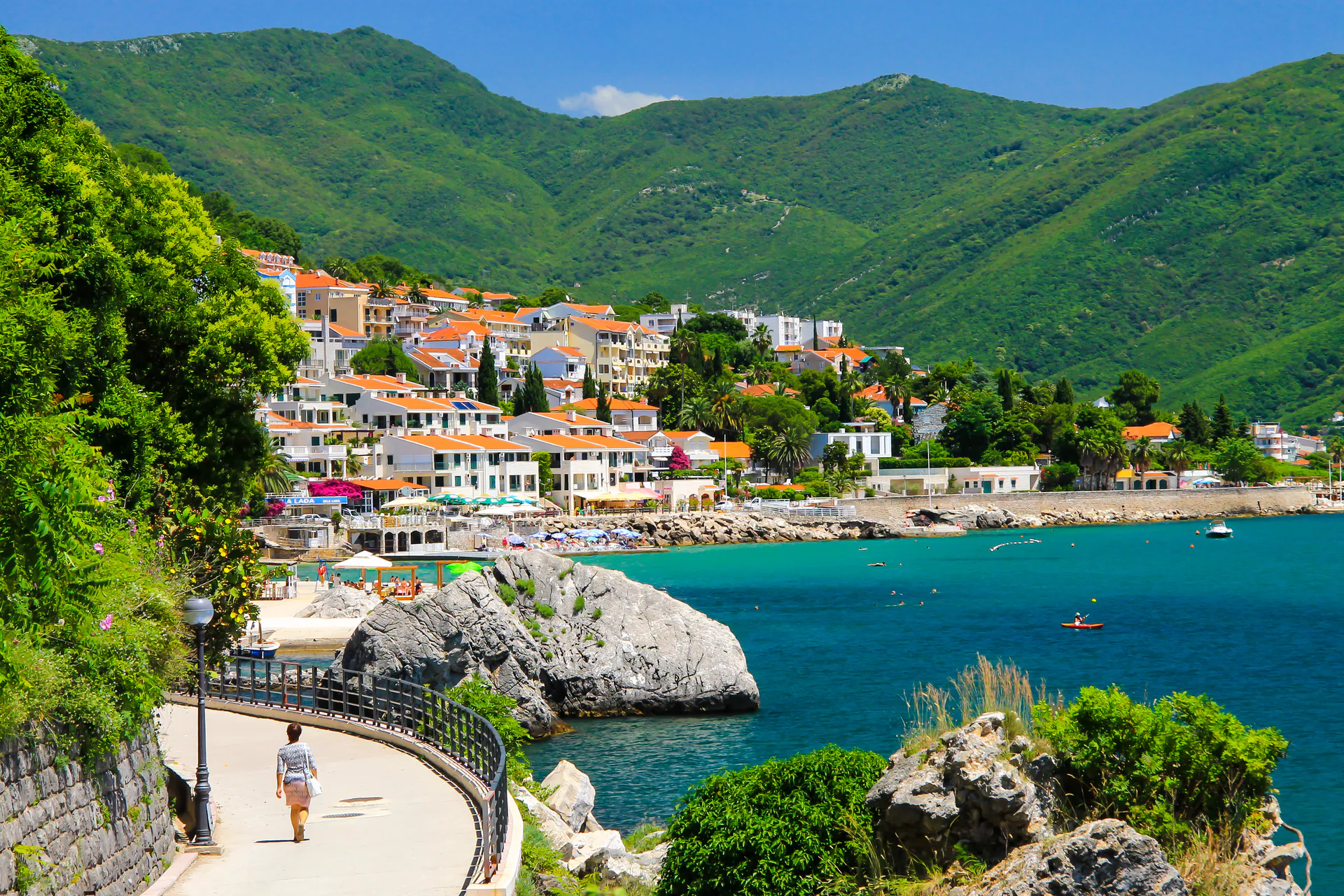
Croatia's coastline runs nearly 1,800 kilometers with over a thousand islands, giving clients room to spread a trip across weeks without repeating a view. A client could sail from Split to Dubrovnik and never see the same town twice, let alone the same coastline. Montenegro works on an entirely different scale. Its coast is a fraction of the length, built around the Bay of Kotor, a UNESCO-listed fjord-like inlet with a medieval old town tucked at its innermost point, and towns like Perast, Tivat, and Sveti Stefan sitting close enough together to see several in a single day. Croatia rewards clients who want to keep discovering something new. Montenegro rewards clients who want to go deep into a small, dramatic stretch of coast rather than cover as much ground as possible.
Both destinations share a Mediterranean table, but the influences underneath it aren't the same, and it's a difference clients notice even if they can't quite name it. Croatian coastal cooking leans closer to its Italian neighbors across the water, paired with wines like Pošip and Plavac Mali that rarely make it outside the region. Montenegro carries a more layered history, Venetian along the coast and Ottoman further into the mountains, which shows up in a cuisine that mixes seafood with hearty mountain dishes in a way Croatia's coast doesn't really attempt. A meal in Kotor can move from grilled fish to smoked ham and cheese from the highlands within the same afternoon, a contrast that's part of what makes Montenegro feel like more than one country compressed into a single trip. Neither is better. They're just telling a different story, and it's worth knowing which one a particular client is actually in the mood to hear.
Croatia's popularity is, in some ways, its own biggest challenge. Dubrovnik alone is approaching 900,000 tourists a year, and while the city has invested seriously in managing that volume, peak summer weeks in the most famous towns still mean real crowds. That's not a reason to avoid Croatia. It's a reason to be specific with clients about when and where they'll actually feel it, and where they won't. A well-timed itinerary that leans on shoulder-season weeks or spends more time on the quieter islands than in Dubrovnik's old town can sidestep most of it entirely, without giving up any of what makes Croatia worth visiting in the first place.
Montenegro has taken a noticeably different path. Rather than chasing volume, the country has leaned into a high-quality, lower-density model, and it shows. Even at the height of summer, Montenegro remains meaningfully less crowded than Croatia, and its cultural experiences still feel genuine rather than staged for visitors passing through. For a client who's already done a crowded European summer and wants something calmer for 2027, that difference is worth naming directly, since it's often the single detail that convinces someone to try a destination they've never seriously considered before.
Montenegro's biggest luxury story in years just played out. With Sveti Stefan back open under Aman and Villa Miločer operating year-round, Montenegro now has a genuine flagship property to anchor a high-end itinerary around, something the destination didn't really have during the years the island sat closed. Part of what makes the reopening notable is the compromise behind it: Sveti Stefan Beach and King's Beach are open to the public at no cost again, while Queen's Beach stays reserved for resort guests, so the exclusivity clients want sits right alongside public access rather than shutting it out entirely. By the time your clients travel in 2027, the resort will have a full season behind it rather than being a brand-new opening, which makes it an easier, lower-risk recommendation than it would have been a year earlier.
Even with Sveti Stefan back in play, Montenegro is still early in its luxury development compared to Croatia's more built-out hospitality scene. That's an advantage for clients who want to feel like they got somewhere before it became a fixture on everyone's itinerary, and it's an easy story for an advisor to tell: a smaller, still-uncrowded coast with one legitimately world-class resort at its center, and plenty of room left for the rest of the destination to catch up over the next several years.
For a lot of clients, the honest answer is that they don't have to pick a side. Croatia and Montenegro border each other, and the drive between Dubrovnik and the Bay of Kotor takes a couple of hours, short enough to fold both destinations into a single trip without feeling rushed. That combination lets a client get Croatia's breadth and Montenegro's compressed drama in one itinerary instead of treating it as an either-or decision, and it tends to make for a much stronger story when they get home than either destination could tell on its own.
A typical version might open in Dubrovnik or along Croatia's Dalmatian coast for the first stretch of the trip, spending several days moving between islands and old towns, then cross the border for a few days around Montenegro's Bay of Kotor and coastline, taking in Perast and Kotor's old town at a slower pace, and closing with a night or two at Sveti Stefan before flying home. Building a combined Croatia-Montenegro itinerary this way gives a client the contrast without the compromise, and it's one of the easiest upsells available once you've framed the two destinations as complementary rather than competing for the same week of vacation.
Take a look at some articles with similar topics that you might find interesting.
5 Things to Do in Croatia That Go Beyond a City Tour
Skip the crowded checklist. Here are 5 real Croatia experiences, from private yacht days to a truffle hunt in Istria, that go far beyond a standard tour.
Truffle Season in Istria: What a Private Hunt With a Local Family Actually Looks Like
What does truffle hunting in Istria actually involve? Here's what a private hunt through the Motovun forest with a local family and their dogs really looks like, and how to pitch it.
The Quiet Islands in Croatia: What 2027's Yacht Charter Trends Say to Watch
Why 2026's yacht charter trends point toward Vis, Mljet, and Šolta, and how to pitch these quiet Croatian islands to clients ready for something beyond Hvar.